RESEARCH & INNOVATION
Work
From the operating room to the policy brief — spanning clinical research, technology evaluation, and systems thinking.
Clinical ophthalmology
Cornea, cataract, and refractive surgery
I study how corneal disease, refractive prediction, and the quality of clinical evidence shape care. These interests span ocular surface health, cataract and refractive planning, and the resources needed to make treatment accessible.
Corneal disease and ocular surface health
Corneal disease raises questions about healing, vision, and symptoms that persist after treatment. Work on tear film dynamics, neurotrophic keratopathy, infectious keratitis, and postoperative pain connects clinical observations with mechanistic questions about disease trajectories, recovery, and the priorities for future studies.
Refractive prediction and planning
Mathematical models offer a way to examine how ocular measurements and uncertainty affect predicted outcomes. Questions about lens alignment, refractive targets, and treatment limits connect that work to clinical planning, with a focus on making the assumptions behind predictions explicit.
Evidence and resources for care
The evidence behind a treatment and the resources needed to deliver it both matter for clinical decisions. Questions about trial design, outcome reporting, donor tissue use, and care capacity connect treatment appraisal with how services are organized and which options can be offered.
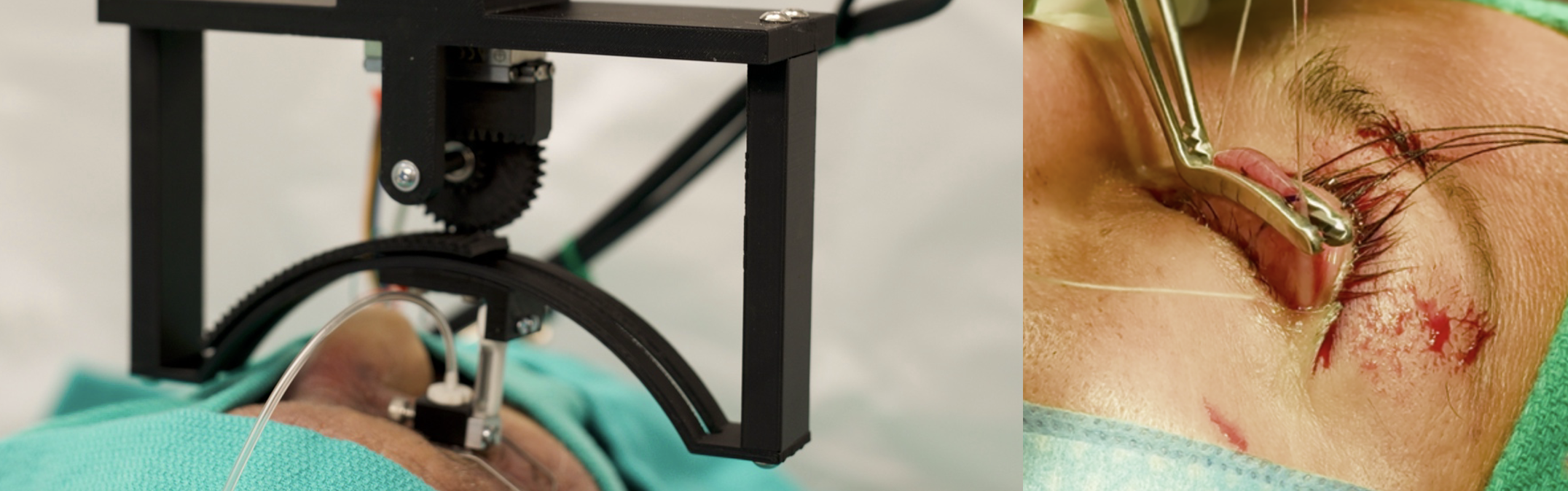
At Wills Eye Hospital, I work on developing and refining surgical techniques in oculoplastic surgery — from sutureless ptosis repair to novel approaches in brow lifting and facial contouring. Earlier work at Stanford’s Byers Eye Institute involved developing and testing devices for orbital surgery.
SELECT PUBLICATIONS
Digital health
Artificial intelligence in clinical practice
Evaluating artificial intelligence in clinical care means examining both the work tools change and the information they produce. That includes the judgment required to interpret predictions, clinical documentation, and synthesized evidence.
Clinical value across the care process
A tool’s value extends beyond its performance on an individual task. Evaluation across an episode of care considers adoption, clinician oversight, follow-up work, and patient outcomes, asking what work is shifted or generated and whether the tool addresses a meaningful clinical need.
Trustworthy information and clinical judgment
Sources, context, and measurement choices shape how information generated or synthesized by AI can be interpreted. Across evidence synthesis and clinical documentation, the focus is on tracing important claims, keeping uncertainty visible, and preserving clinicians’ responsibility for judgment.
Health policy and economics
Access, value, and medical education
The organization of care and public policy shape patients’ experiences and the choices available to them. Medical education connects these questions with how clinicians prepare to discuss difficult decisions.
Resources and the burden of care
Comparing staffing, monitoring, and care delivery requires attention to access, costs, patient time, and downstream testing. Questions for models and trials include how to account for limited resources and the work different approaches shift to patients and clinicians.
Accountability in health policy
Evaluating Medicaid work requirements and fraud enforcement means asking who may lose coverage, how care may be interrupted, and what administrative responsibilities fall to clinicians. A central question is which safeguards can identify and address unintended consequences for patients.
Preparing clinicians for difficult conversations
Conversations about mortality, uncertainty, and the cost of care bring patients’ priorities into decisions with emotional and financial consequences. The educational question is how training can prepare clinicians to explain available choices clearly, respond compassionately, and discuss what matters to patients.

The Doctor's Art is a podcast I created and co-host that features conversations with physicians, patients, educators, and healthcare leaders about what makes medicine meaningful. The show explores what sustains clinicians through the demands of training and practice — and what medicine can teach all of us about living with purpose.
The podcast is among the most popular medical podcasts in the U.S., Canada, and the U.K., and is used by medical schools around the U.S. as a teaching tool and wellness initiative.
Before and alongside residency — venture capital, public health, global health, and entrepreneurship.